
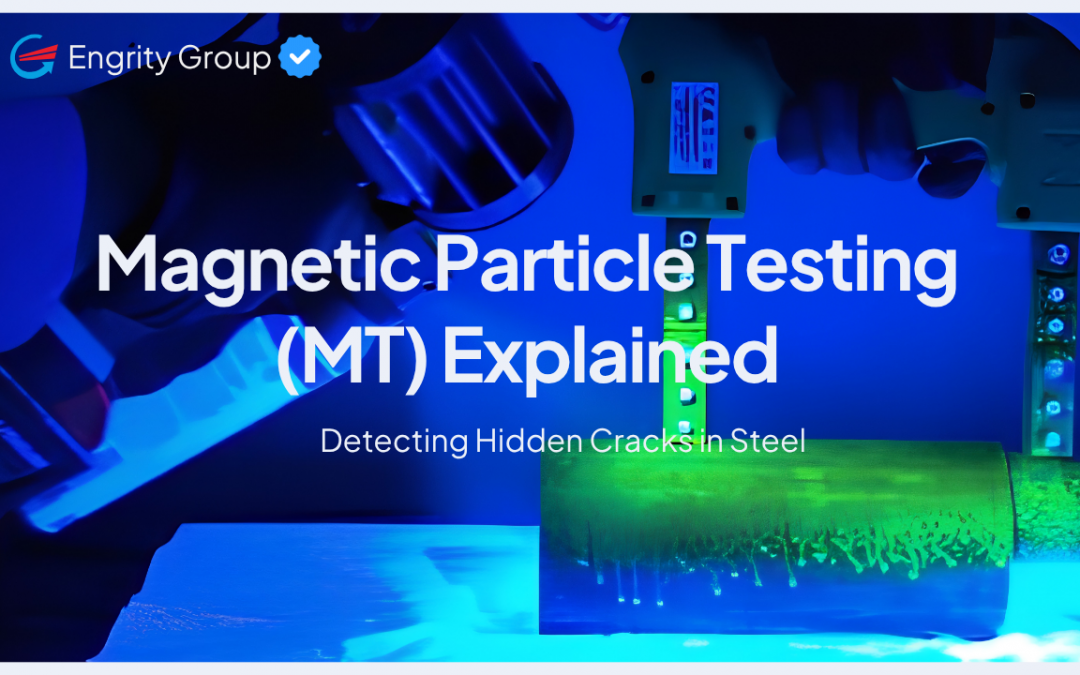
Magnetic Particle Testing (MT): The Science Behind Detecting Hidden Cracks in Steel
Hello Everyone!
Steel is one of the most widely used materials in modern infrastructure. From pipelines and pressure equipment to structural steel buildings, bridges, and heavy industrial machinery, steel components are relied upon to withstand extreme loads and operating conditions.
However, even the strongest materials can develop defects during manufacturing, welding, fabrication, transportation, installation, or service operation. Some of these defects are not visible to the human eye but can significantly affect the safety and reliability of a component.
This is where Magnetic Particle Testing (MT) becomes an essential Non-Destructive Testing (NDT) method.
Magnetic Particle Testing is a proven technique used to detect surface and near-surface discontinuities in ferromagnetic materials such as carbon steel. By using magnetism and specially designed magnetic particles, qualified technicians can locate cracks and other defects before they become major failures.
At Engrity Group, we support industries across Western Canada by providing qualified NDT professionals and QA/QC Inspection services to help clients maintain quality, safety, and compliance throughout their projects.
What is Magnetic Particle Testing (MT)?
Magnetic Particle Testing, commonly referred to as MT or MPI (Magnetic Particle Inspection), is a non-destructive examination method that uses magnetic fields and iron particles to identify flaws in magnetic materials.
Unlike destructive testing methods that require cutting or damaging a component, MT allows technicians to evaluate the integrity of a component while keeping it fully functional.
The main purpose of MT is to identify discontinuities such as:
- Surface cracks
- Fatigue cracks
- Welding defects
- Lack of fusion
- Grinding cracks
- Seam defects
- Heat treatment cracks
These defects are especially important to identify in components that experience high stress, vibration, pressure, or repeated loading conditions.
How Does Magnetic Particle Testing Work?
The MT process is based on a simple scientific principle: magnetic flux leakage.
The testing process generally involves the following steps:
1. Surface Preparation
Before testing begins, the inspection area is cleaned to remove contaminants such as:
- Oil
- Grease
- Dirt
- Paint
- Scale
- Rust
Proper surface preparation is important because contamination can reduce the ability to detect small indications.
2. Magnetization of the Component
A magnetic field is applied to the test area using equipment such as:
- Yokes
- Prods
- Coils
- Electromagnetic benches
When the material is magnetized, magnetic lines of force travel through the component.
If the material is continuous and free from defects, the magnetic field flows smoothly.
However, when a crack or discontinuity interrupts the material, the magnetic field escapes from the surface. This is known as magnetic flux leakage.
3. Application of Magnetic Particles
Fine magnetic particles are applied to the surface.
These particles may be:
- Dry particles applied as powder
- Wet fluorescent particles suspended in liquid
When the particles reach an area where magnetic flux leakage occurs, they gather around the defect and create a visible indication.
Under proper lighting conditions, technicians can clearly identify and evaluate the indication.
Why is Magnetic Particle Testing Important?
A small crack in a steel component may appear insignificant, but under operating conditions it can grow due to:
- Cyclic loading
- Vibration
- Pressure fluctuations
- Temperature changes
- Mechanical stress
According to industry safety studies, fatigue-related failures are among the most common causes of structural and mechanical component failures. Early detection through NDT methods such as MT helps companies prevent unexpected downtime, costly repairs, and potential safety incidents.
The global non-destructive testing market continues to expand as industries place greater emphasis on asset reliability, preventive maintenance, and regulatory compliance. The worldwide NDT industry is projected to grow significantly over the coming years, driven by demand from sectors such as energy, aerospace, manufacturing, infrastructure, and construction.
Where is Magnetic Particle Testing Used?
Magnetic Particle Testing is widely used across industries where steel integrity is critical.
Oil & Gas Industry
MT is commonly used for:
- Pipeline components
- Welded connections
- Structural supports
- Equipment components
- Maintenance inspections
The oil and gas industry relies heavily on NDT methods because failures can lead to production losses, environmental risks, and safety hazards.
Steel Fabrication Shops
Fabricators use MT to verify weld quality and ensure fabricated components meet project requirements.
Common applications include:
- Structural steel welds
- Pipe supports
- Brackets
- Heavy equipment components
MT provides confidence that welds are free from unacceptable surface defects before delivery to the client.
Pipeline Construction
Pipeline projects require strict quality control due to the operating pressures and environmental conditions involved.
MT may be performed on:
- Welded joints
- Attachments
- Fittings
- Structural components
Power Generation and Industrial Facilities
Power plants and industrial facilities use MT during:
- New construction
- Shutdown inspections
- Preventive maintenance programs
The goal is to identify potential failures before equipment is returned to service.
Advantages of Magnetic Particle Testing
Magnetic Particle Testing remains one of the most popular NDT methods because it provides several benefits:
High Sensitivity
MT can detect very small surface-breaking defects that may not be visible during visual examination.
Fast Testing Process
Compared with many other testing methods, MT can be completed quickly, making it suitable for field applications.
Minimal Component Preparation
MT generally requires less preparation compared with some advanced examination methods.
Cost Effective
It provides reliable results without damaging expensive components.
Portable Equipment
Modern MT equipment allows technicians to perform testing in fabrication shops, construction sites, and remote locations.
Limitations of Magnetic Particle Testing
While MT is highly effective, it does have limitations.
MT can only be performed on ferromagnetic materials, including:
- Carbon steel
- Low alloy steel
- Iron-based materials
It cannot be used effectively on non-magnetic materials such as:
- Aluminum
- Copper
- Stainless steel grades with low magnetic properties
MT is also mainly effective for detecting surface and near-surface defects. For deeper internal defects, other NDT methods such as Ultrasonic Testing (UT) or Radiographic Testing (RT) may be required.
How to Become a Magnetic Particle Testing Technician in Canada
A career in NDT requires proper training, certification, and practical experience.
In Canada, technicians commonly pursue:
CGSB Magnetic Particle Testing Level 1 or Level 2 Certification
A Level 1 technician typically performs testing under supervision, while a Level 2 technician can independently perform examinations, interpret results, and prepare technical reports.
Along with certification, practical field experience is essential to developing the skills required to:
- Properly perform testing procedures
- Identify relevant indications
- Evaluate acceptance criteria
- Complete accurate reports
- Work safely in industrial environments
The Role of MT in Quality Assurance and Quality Control
Magnetic Particle Testing is an important part of a larger QA/QC Inspection program.
Quality professionals use NDT methods like MT to verify that materials and welds meet:
- Project specifications
- Client requirements
- Industry standards
- Safety expectations
Effective QA/QC programs help reduce failures, improve reliability, and ensure projects are completed to the required quality standards.
Conclusion
Magnetic Particle Testing is a powerful and reliable NDT method that helps industries identify hidden defects before they become serious problems.
From fabrication shops to pipelines, energy facilities, and heavy industrial projects, MT plays an important role in protecting equipment, improving reliability, and supporting safer operations.
At Engrity Group, our qualified professionals provide NDT Testing and QA/QC Inspection services to help clients maintain the highest standards of quality and safety across Western Canada.
Understanding NDT methods like Magnetic Particle Testing is not only important for inspectors and technicians—it is essential knowledge for anyone involved in welding, fabrication, engineering, construction, and industrial operations.
Engrity Group
Building Confidence Through Quality and Compliance.
Experience the Difference
Contact
Phone
+1 (780) 800-6297
info@engrity.com
Address:
201-9403 63 Ave NW, Edmonton, AB T6E 0G2