
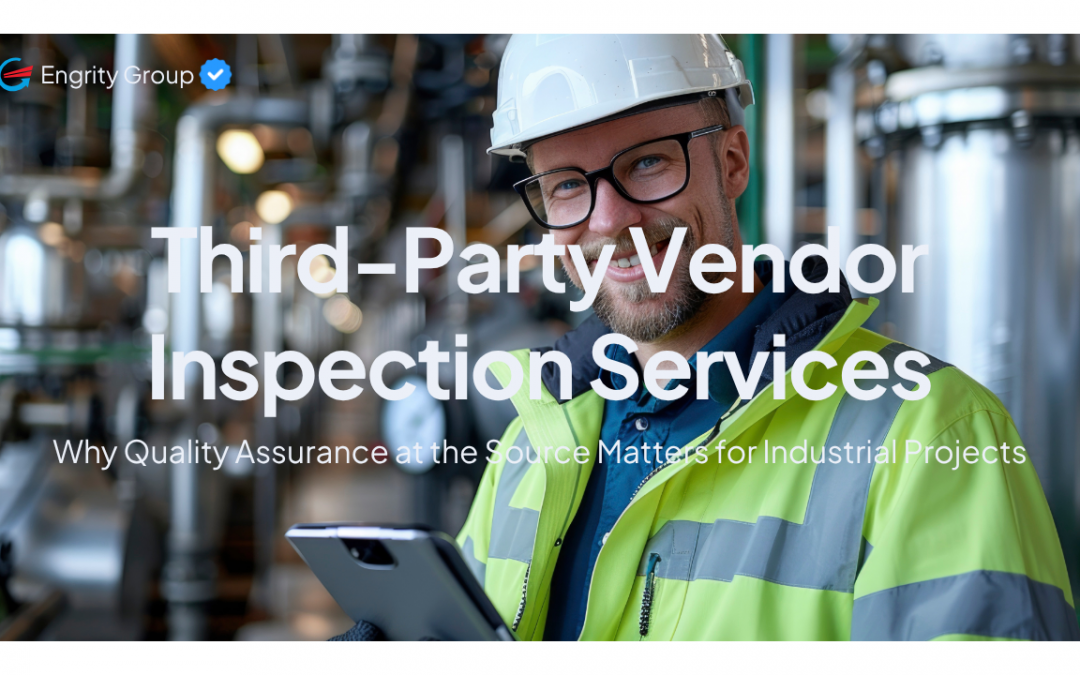
Third-Party Vendor Inspection Services
Hello Industrial Partners!
In today’s industrial environment, projects are becoming increasingly complex, schedules are tighter, and the cost of delays continues to rise. Whether constructing a new pipeline, expanding a processing facility, commissioning a power generation plant, or developing a mining operation, project success depends heavily on the quality and reliability of equipment and materials supplied by manufacturers.
Critical components such as pressure vessels, heat exchangers, piping systems, valves, pumps, structural steel, tanks, electrical equipment, and fabricated assemblies are often sourced from vendors located across Canada, the United States, and around the world. While global sourcing provides access to specialized manufacturing capabilities and competitive pricing, it also introduces additional quality risks that can significantly impact project timelines and budgets.
A manufacturing defect, non-conformance, documentation issue, or missed project specification discovered after equipment arrives on site can lead to substantial consequences, including:
- Costly rework and repairs
- Project delays and schedule disruptions
- Increased labor and equipment costs
- Shipping and replacement expenses
- Contract disputes and warranty claims
- Safety concerns during installation or operation
- Delayed commissioning and startup activities
This is where Vendor Inspection Services play a critical role.
By verifying quality and compliance throughout the manufacturing process, vendor inspections help identify issues before shipment, reducing risk and helping ensure that equipment arrives ready for installation and operation.
What Are Vendor Inspection Services?
Vendor Inspection Services involve independent verification of equipment, materials, and manufacturing processes at a supplier’s facility during production and prior to shipment.
The purpose of vendor inspection is to confirm that products are being manufactured in accordance with:
- Project specifications
- Purchase order requirements
- Engineering drawings
- Industry standards
- Applicable codes and regulations
- Quality management requirements
Vendor inspections are typically performed by qualified third-party inspectors who act on behalf of the project owner, engineering company, procurement team, or contractor.
These inspections provide objective oversight and help ensure that quality requirements are met throughout fabrication, testing, and final acceptance activities.
Why Vendor Inspections Are Essential
Preventing Costly Field Issues
One of the most significant advantages of vendor inspections is the ability to identify problems before equipment leaves the manufacturing facility.
When defects are discovered during fabrication, corrective actions can often be implemented quickly and at a relatively low cost.
However, if those same issues are identified after shipment or installation, the consequences can be substantial.
Examples may include:
- Welding defects
- Dimensional inaccuracies
- Material substitutions
- Missing certifications
- Incomplete testing
- Coating deficiencies
- Documentation errors
Addressing these issues before shipment can save thousands—or even millions—of dollars over the life of a project.
Protecting Project Schedules
Project schedules are often built around the timely delivery of critical equipment.
A single delayed shipment can impact multiple project activities, including:
- Construction sequencing
- Mechanical completion
- Commissioning
- Startup operations
Vendor inspections provide visibility into fabrication progress and help identify potential schedule concerns before they become major delays.
This proactive approach allows project teams to make informed decisions and maintain schedule certainty.
Ensuring Compliance with Industry Standards
Industrial projects must comply with numerous codes, standards, and regulatory requirements.
Depending on the equipment being manufactured, applicable standards may include:
- ASME
- CSA
- API
- ASTM
- AWS
- ISO
- NACE
- NBIC
- Client-specific specifications
Vendor inspectors verify that manufacturing activities and quality control processes align with these requirements, helping reduce compliance risks and supporting regulatory acceptance.
Supporting Procurement and Quality Teams
Procurement and project management teams often manage multiple vendors simultaneously, sometimes across different regions or countries.
Maintaining direct oversight of every supplier can be challenging.
Vendor inspection services provide an extension of the owner’s quality assurance team by delivering independent assessments of manufacturing progress and quality performance.
Regular reporting and inspection updates allow stakeholders to maintain visibility without needing to be physically present at each manufacturing facility.
Types of Equipment Commonly Subject to Vendor Inspection
Vendor inspections can be performed on a wide range of industrial equipment and fabricated components.
Common examples include:
Pressure Equipment
- Pressure vessels
- Boilers
- Heat exchangers
- Air receivers
- Process separators
Piping Components
- Piping spools
- Valves
- Flanges
- Fittings
- Expansion joints
Rotating Equipment
- Pumps
- Compressors
- Turbines
- Blowers
- Fans
Structural Components
- Structural steel
- Pipe racks
- Modular skids
- Platforms
- Support structures
Electrical and Instrumentation Equipment
- MCCs
- Control panels
- Transformers
- Instrument enclosures
- Electrical skids
Mining and Heavy Industrial Equipment
- Conveyors
- Material handling systems
- Tanks
- Crushers
- Processing equipment
Key Activities Performed During Vendor Inspections
Vendor inspections can be tailored to meet specific project requirements and may involve various stages of the manufacturing process.
Documentation Review
Quality begins with proper documentation.
Inspectors review:
- Manufacturing procedures
- Welding procedures
- Material certifications
- Inspection and test plans (ITPs)
- Quality records
- Calibration certificates
- Engineering drawings
This review ensures all required documentation is available and compliant before production proceeds.
Material Verification
Inspectors verify that materials used during fabrication meet project specifications.
This may include:
- Material traceability verification
- Heat number confirmation
- Material test report review
- Positive Material Identification (PMI)
- Compliance with specified grades and standards
Material verification helps prevent the use of incorrect or substituted materials.
Witnessing Manufacturing Activities
Vendor inspectors observe key fabrication activities to ensure work is performed according to approved procedures.
Activities may include:
- Cutting and fit-up
- Welding operations
- Heat treatment
- Machining
- Assembly
- Surface preparation
- Coating application
Direct observation provides assurance that manufacturing processes are being executed properly.
Witnessing Non-Destructive Testing (NDT)
Many industrial components require NDT to verify integrity and quality.
Vendor inspectors may witness:
- Visual Testing (VT)
- Magnetic Particle Testing (MT)
- Liquid Penetrant Testing (PT)
- Ultrasonic Testing (UT)
- Radiographic Testing (RT)
- Phased Array Ultrasonic Testing (PAUT)
- Time of Flight Diffraction (TOFD)
Inspectors review results and confirm testing is completed according to project requirements.
Dimensional Inspection
Dimensional verification ensures fabricated components meet design tolerances.
Inspectors may verify:
- Length
- Diameter
- Thickness
- Alignment
- Flatness
- Squareness
- Fit-up dimensions
Proper dimensional control helps prevent installation issues during construction.
Hydrostatic and Functional Testing
Many components require operational testing before shipment.
Examples include:
- Hydrostatic pressure testing
- Pneumatic testing
- Leak testing
- Functional performance testing
- Factory Acceptance Testing (FAT)
Inspectors witness testing and verify results meet project acceptance criteria.
Coating and Surface Inspection
Protective coatings are critical for long-term asset performance.
Vendor inspectors may verify:
- Surface preparation
- Coating thickness
- Environmental conditions
- Holiday testing
- Adhesion testing
- Coating system compliance
Proper coating inspection helps prevent premature corrosion and coating failure.
Final Inspection and Release
Prior to shipment, inspectors conduct final acceptance inspections to verify:
- Completion of required work
- Resolution of non-conformances
- Documentation completeness
- Equipment identification and marking
- Packaging and preservation requirements
Once all requirements have been satisfied, equipment may be released for shipment.
Benefits of Third-Party Vendor Inspection
Organizations that implement vendor inspection programs often experience significant benefits, including:
Improved Product Quality
Independent oversight helps ensure products meet required specifications and standards.
Reduced Rework Costs
Early identification of issues minimizes costly field repairs and corrective actions.
Greater Schedule Certainty
Monitoring fabrication progress helps reduce the risk of unexpected delivery delays.
Enhanced Risk Management
Vendor inspections provide an additional layer of quality assurance throughout manufacturing.
Improved Supplier Accountability
Regular inspections encourage vendors to maintain quality standards and production commitments.
Increased Stakeholder Confidence
Project owners, engineers, and contractors gain confidence knowing equipment has been independently verified before shipment.
Industries That Benefit from Vendor Inspection Services
Vendor inspection services are widely used across numerous sectors, including:
Oil and Gas
Critical equipment reliability is essential for upstream, midstream, and downstream operations.
Power Generation
Vendor inspections help ensure quality and reliability of equipment used in power plants and energy infrastructure.
Mining
Large-scale mining projects often depend on specialized equipment sourced from multiple manufacturers.
Petrochemical and Chemical Processing
Vendor inspections help verify compliance with strict process safety and quality requirements.
Infrastructure and Construction
Fabricated structural and mechanical components can be inspected throughout production to ensure compliance and project readiness.
Why Choose Engrity Inspection for Vendor Inspection Services?
At Engrity Inspection, we understand the importance of quality assurance throughout the supply chain. Our experienced inspectors provide independent third-party vendor inspection services that help clients identify issues early, maintain compliance, and protect project schedules.
Our team supports projects across Canada and internationally by providing:
- Vendor surveillance and monitoring
- Manufacturing progress assessments
- Inspection and testing witnessing
- Quality documentation reviews
- Non-conformance identification and reporting
- Final inspection and release services
- Detailed inspection reports and recommendations
We work closely with project owners, engineering firms, procurement teams, and contractors to deliver reliable inspection services tailored to project-specific requirements.
Conclusion
Quality issues discovered after equipment arrives on site are often significantly more expensive and disruptive than those identified during manufacturing. Vendor Inspection Services provide a proactive approach to quality assurance by verifying compliance, monitoring production, witnessing critical testing activities, and identifying potential issues before shipment.
As industrial projects continue to grow in complexity, independent third-party vendor inspections have become an essential tool for reducing risk, protecting schedules, controlling costs, and ensuring successful project outcomes.
Whether you require a single inspection visit, milestone inspections, or ongoing vendor surveillance throughout fabrication, Engrity Inspection delivers the expertise and independent oversight needed to help safeguard your project investment.
Partner with Engrity Inspection
Looking for reliable Vendor Inspection Services? Contact Engrity Inspection today to learn how our experienced inspectors can help verify quality, ensure compliance, and protect your project from costly manufacturing and supply chain risks.
📍 Serving Alberta & Western Canada
📞 Contact Engrity Inspection today to discuss your project requirements and discover how our QA/QC inspection services can help strengthen your next project.
Engrity — Where Quality Meets Confidence.
Experience the Difference
Contact
Phone
+1 (780) 800-6297
info@engrity.com
Address:
201-9403 63 Ave NW, Edmonton, AB T6E 0G2