
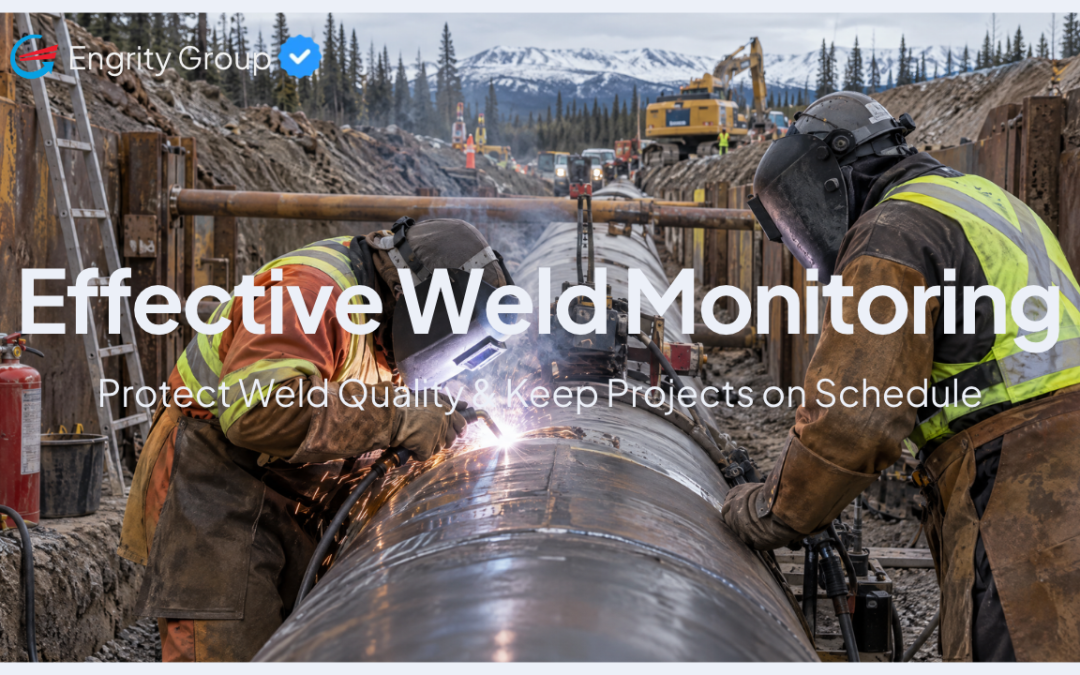
The Importance of Weld Monitoring in Pipeline and Industrial Construction
Hello Everyone!
How effective welding parameter monitoring helps maintain weld quality, reduce rework, and keep construction projects on schedule.
In pipeline construction, structural steel fabrication, and industrial projects, weld quality plays a critical role in the integrity, reliability, and long-term performance of welded components. Even small deviations in welding parameters can affect weld characteristics, increase the risk of defects, and result in costly repairs or project delays.
Effective weld monitoring helps ensure welding activities remain within the approved Welding Procedure Specification (WPS) and meet applicable project quality requirements. By monitoring key parameters throughout the welding process, inspection personnel can identify deviations early and help maintain consistent workmanship across the project.
At Engrity Group, we support pipeline and industrial construction projects across Western Canada with welding inspection, welding parameter monitoring, visual inspection, and quality documentation.
What Is Weld Monitoring?
Weld monitoring is the process of observing and verifying welding activities to ensure the work is performed in accordance with the approved WPS, project specifications, and applicable codes and standards.
Depending on the welding process and project requirements, monitoring may include checking amperage, voltage, travel speed, preheat and interpass temperatures, heat input, welding progression, and other procedure-specific variables.
These parameters influence how a weld is formed, how the weld metal and heat-affected zone respond to the welding process, and whether the completed weld meets the required acceptance criteria.
Weld monitoring is not simply about checking a completed weld. It also involves observing the welding process as the work progresses, helping identify deviations before they contribute to quality issues.
Key Welding Parameters to Monitor
1. Amperage and Voltage
Amperage and voltage are fundamental welding parameters that influence arc characteristics, metal transfer, penetration, and weld bead appearance.
-
Amperage: Influences the rate at which welding energy is delivered and can affect penetration and deposition rate.
-
Voltage: Influences arc length and can affect bead width, arc stability, and overall weld profile.
If these parameters fall outside the approved WPS ranges, the resulting weld may not achieve the required characteristics. Excessive or insufficient settings can contribute to issues such as inconsistent penetration, poor bead profile, or other procedure-dependent weld discontinuities.
What inspectors look for: Verification of welding machine settings and observed operating parameters against the approved WPS, along with attention to consistency throughout the welding operation.
2. Travel Speed
Travel speed refers to how quickly the welder advances along the joint. It influences weld bead size, penetration, and heat input.
When travel speed is too high, the weld may not receive sufficient energy per unit length, potentially contributing to inadequate fusion or an undersized weld. When travel speed is too low, excessive heat input or an oversized weld bead may result, depending on the joint design and welding procedure.
What inspectors look for: Consistent progression along the joint and compliance with any specified travel speed or heat input requirements.
3. Preheat and Interpass Temperature
Temperature control is particularly important when welding materials or joints that are susceptible to cracking or other metallurgical concerns.
-
Preheat temperature: The temperature of the base material before welding begins. Preheat can influence cooling rates and help reduce the risk of hydrogen-assisted cracking under appropriate conditions.
-
Interpass temperature: The temperature of the weld area before depositing the next pass in a multipass weld. It helps control thermal conditions throughout the welding sequence.
Insufficient preheat or excessive interpass temperature can affect weld quality and material properties. The required temperature limits depend on the approved procedure, material, thickness, and applicable project requirements.
What inspectors look for: Verification of temperature measurements using appropriate equipment and confirmation that specified minimum and maximum temperatures are maintained.
4. Heat Input
Heat input describes the amount of welding energy applied per unit length of weld. It is influenced by welding current, voltage, and travel speed, with the calculation also depending on the method and efficiency factor specified for the process.
Heat input can influence cooling rates, weld metal microstructure, the heat-affected zone, and mechanical properties. Both excessive and insufficient heat input can create concerns, depending on the material and welding procedure.
Where heat input limits are specified, monitoring helps confirm that welding remains within the approved range.
What inspectors look for: Verification of the relevant welding parameters and travel speed, followed by confirmation that calculated heat input meets the applicable procedure requirements.
5. Weld Progression: Uphill and Downhill Welding
Weld progression refers to the direction in which welding advances along a joint. Depending on the welding process, joint configuration, and approved procedure, welding may be performed using uphill or downhill progression.
The selected technique can influence penetration, fusion, bead profile, and the resulting weld characteristics. Using a technique that is not permitted by the approved WPS may compromise compliance with project requirements.
What inspectors look for: Confirmation that the welding process, progression direction, technique, and other applicable variables align with the approved procedure.
Why Is Weld Monitoring Important?
Early Identification of Parameter Deviations
Monitoring welding activities as they happen allows deviations to be identified while corrective action may still be possible. This can help prevent continued use of incorrect settings or techniques across multiple welds.
Consistent Weld Quality
Maintaining welding parameters within approved limits supports consistency between welds, weld passes, and production areas. Consistency is especially important on projects involving multiple welders, shifts, work fronts, or contractors.
Reduced Repairs and Rework
Weld repairs require additional labour, equipment, inspection, and documentation. Depending on the project, repairs can also affect downstream activities and production schedules.
Effective monitoring helps identify potential issues earlier, reducing the likelihood that preventable deviations will progress into more extensive rework.
Compliance With Project Requirements
Welding activities must follow the applicable WPS, project specifications, and governing codes and standards. Inspectors help verify compliance with these requirements and document observations or deviations where necessary.
The applicable requirements vary by project, material, welding process, and contract. Monitoring should therefore be based on the approved project documentation rather than a generic set of parameter limits.
Improved Project Efficiency
Quality issues can interrupt production, delay subsequent work, and increase project costs. Integrating inspection and monitoring into the construction workflow helps teams address issues earlier and maintain better coordination between welding, quality control, and project management personnel.
Weld Monitoring and Visual Inspection: Understanding the Difference
Weld monitoring and visual inspection are closely related, but they serve different purposes.
Weld monitoring focuses on the welding process and whether the activity complies with the approved procedure. It may include observing welding techniques and checking parameters such as temperature, amperage, voltage, and travel speed, where applicable.
Visual inspection involves examining the weld and associated components for visible discontinuities, dimensional concerns, and other conditions against specified acceptance criteria. Depending on the stage of inspection, this can include examination before, during, or after welding.
Neither activity automatically replaces the other. A weld may appear acceptable visually while still requiring verification of process compliance or additional examination. Likewise, compliance with welding parameters does not by itself establish that a completed weld is acceptable.
Additional nondestructive testing may be required by the applicable code, specification, or inspection plan.
The Role of Welding Inspectors in Construction Projects
Qualified welding inspection personnel support construction teams by verifying that welding activities and completed work meet defined quality requirements.
Depending on the project scope and assigned responsibilities, welding inspection activities may include:
-
Reviewing the applicable WPS and relevant project documentation.
-
Verifying welding parameters and techniques against specified requirements.
-
Checking preheat and interpass temperatures where required.
-
Performing visual examination at designated stages of welding.
-
Identifying and documenting deviations or potential quality concerns.
-
Communicating findings to the appropriate project and quality personnel.
-
Maintaining inspection records and supporting required quality documentation.
The inspection scope, reporting responsibilities, and required qualifications should be established in accordance with the project’s inspection and test plan, contract requirements, and applicable standards.
Common Weld Monitoring Challenges on Pipeline and Industrial Projects
Large construction projects often involve multiple work fronts, changing environmental conditions, tight production schedules, and crews working across different shifts.
These conditions can create challenges for consistent quality control.
Changing site conditions: Temperature, wind, and other environmental conditions may affect welding operations and the controls required by the procedure.
Multiple crews and shifts: Consistent communication and documentation help maintain continuity when welding activities move between personnel or work areas.
Production pressures: Schedule demands can make it important to integrate inspection activities into the workflow without overlooking required quality checks.
Incomplete documentation: Missing or inconsistent inspection records can make it difficult to verify compliance and resolve quality issues efficiently.
A structured inspection approach, clear communication, and timely reporting help address these challenges and support project quality objectives.
How Engrity Group Supports Welding Quality
Engrity Group provides welding inspection and quality control support for pipeline and industrial construction projects across Western Canada.
Our CWB Level 1 and Level 2 Welding Inspectors support project teams through services that may include welding parameter monitoring, visual inspection, and quality documentation, subject to the project scope and applicable qualification requirements.
By helping teams identify deviations, verify workmanship, and maintain inspection records, we support efforts to reduce avoidable rework and maintain compliance with project specifications.
Whether supporting pipeline construction, structural steel work, or industrial projects, our focus is on providing competent, reliable, and responsive inspection services aligned with project requirements.
Frequently Asked Questions About Weld Monitoring
What welding parameters should be monitored?
Common parameters include amperage, voltage, travel speed, preheat temperature, interpass temperature, and heat input. Welding process, progression, technique, and other variables may also require verification under the approved WPS.
Can weld monitoring prevent all welding defects?
No. Monitoring helps identify process deviations and reduce certain quality risks, but it cannot guarantee defect-free welds. Appropriate welding procedures, qualified personnel, material controls, inspection, and any required nondestructive testing remain important.
Is weld monitoring the same as visual inspection?
No. Weld monitoring focuses on the welding process and procedure compliance, while visual inspection examines the weld and related components against applicable acceptance criteria. Both may be required as part of a project’s quality control program.
When should weld monitoring take place?
Monitoring may occur before welding, during welding, and at specified inspection stages afterward. The timing and extent depend on the approved WPS, project specifications, inspection plan, and applicable code requirements.
Why is an approved WPS important?
The WPS establishes the applicable welding process, essential variables, and other required controls for producing welds that meet the intended requirements. Welding activities should be performed within the applicable procedure limits and any additional project-specific requirements.
Conclusion: Quality Welding Starts With Effective Monitoring
Weld quality is influenced by more than the final appearance of a completed joint. Monitoring the welding process, verifying critical parameters, and documenting inspection activities all contribute to a consistent and effective quality control program.
By identifying deviations early and verifying compliance with the approved WPS, project teams can help reduce avoidable repairs, maintain quality requirements, and keep construction activities moving efficiently.
Planning an upcoming pipeline or industrial construction project?
Contact Engrity Group Inc. to discuss your welding inspection and quality control requirements. Our team can help you identify the inspection support needed for your project and coordinate services aligned with your scope, schedule, and applicable quality requirements.
Engrity Group Inc. — Competent. Reliable. Fast.
Website: https://engrity.com/
Phone: 780-800-6297
Email: info@engrity.com
Engrity Group
Building Confidence Through Quality and Compliance.
Experience the Difference
Contact
Phone
+1 (780) 800-6297
info@engrity.com
Address:
201-9403 63 Ave NW, Edmonton, AB T6E 0G2